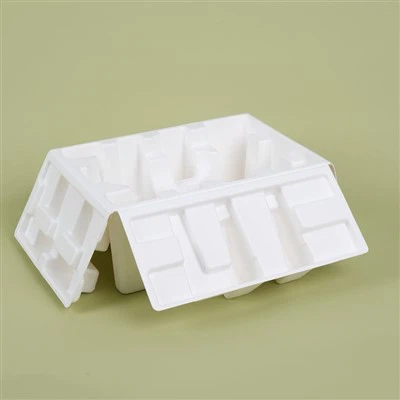
This includes egg cartons, egg trays, fruit trays, flower pots, and disposable medical bedpans. Made from waste paper with added moisture-proofing or waterproofing agents, these molded products are shaped for various uses and serve as cushioning for eggs, fruit, precision devices, fragile glass and ceramic items, and handicrafts, providing excellent cushioning and protection. The production technology and equipment for pulp molding are developing rapidly. The basic process involves four steps: pulp preparation, molding, drying, and shaping.
Pulp molded products are a rapidly growing new packaging material in recent years and an excellent substitute for wood. The manufacturing process for pulp molded products involves: raw material pulping – batching – molding – drying – setting. Because a large amount of moisture (approximately 55-60%) remains on the workpiece after molding, resulting in a final product moisture content of 12-14%, approximately half the workpiece's weight in moisture must be removed during the drying process. This moisture is entirely removed by absorbing heat and turning into water vapor. Because the drying process involves a phase change and consumes a great deal of energy, pulp molding products are processed into high-energy-consuming products. Therefore, it is essential to conduct a thermodynamic analysis of the energy conversion process during drying. This analysis allows for improvements in the design and manufacturing of drying equipment, increasing energy utilization and providing significant guidance for reducing production costs in the pulp molding industry.