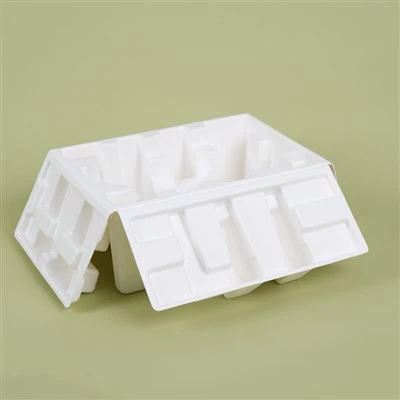
Pulp molding (also known as pulp molding) refers to environmentally friendly products made from cardboard scraps, wood pulp, and other raw materials with appropriate chemical additives. The process involves pulping, vacuum or pressure adsorption molding, and subsequent molding and drying. The production process complies with GB 4806.8-2022 food safety standards and BB/T 0045-2021 industrial packaging standards, employing CNC molding technology and including multiple processes such as molding and drying.
Products are divided into two main categories: food packaging (egg trays, coffee trays) and industrial protective packaging (cushions for electronic components). Raw materials can include bagasse pulp, straw, and other natural fibers.
Pulp molds are widely used in the packaging industry due to their abundant raw material sources, low production costs, lack of white pollution during production and use, lightweight yet high compressive strength, good cushioning performance, and certain plasticity. With the addition of appropriate chemical additives, they can also achieve some special properties. Therefore, they are widely used in the packaging industry for shockproof inner packaging of certain tableware, fresh eggs, fruits, glass, ceramics, electronic appliances, and other fragile products. In addition, some substrates for planting seedlings, handicrafts, medical equipment, and mechanical parts are also being explored for conversion from plastic products to pulp molds to eliminate the "white pollution" caused by the non-degradability of plastic products.