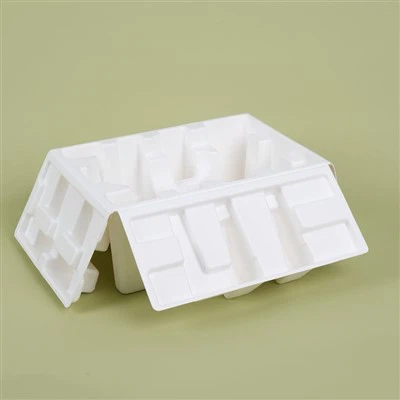
Storing and transporting pulp molding products is crucial for ensuring product quality and performance. In terms of storage, the primary task is to ensure a suitable warehouse environment. The warehouse should be dry and well-ventilated, avoiding direct sunlight to prevent product deformation due to moisture or high temperatures. Relative humidity should be controlled below 65% to maintain product stability. Products should be placed on pallets off the ground, maintaining a certain distance from walls to help prevent moisture absorption and deformation. Stacking height needs to be determined based on the product's load-bearing design to avoid crushing the bottom layer.
In transportation, choosing clean, covered transport vehicles is essential to prevent products from being exposed to rain or direct sunlight. During loading and unloading, handle with care, avoiding rough handling, especially for delicate or fragile pulp molding inner packaging. For additional protection, corrugated cardboard boxes are recommended for containerization. Although pulp molding itself has some cushioning, its edges and corners can still be damaged by severe impacts. Therefore, scientific warehousing and transportation management is crucial to ensuring that products arrive at customers in perfect condition and fulfill their protective function. Furthermore, proper storage conditions can extend the product's shelf life and maintain its optimal performance.